 Lança-livros
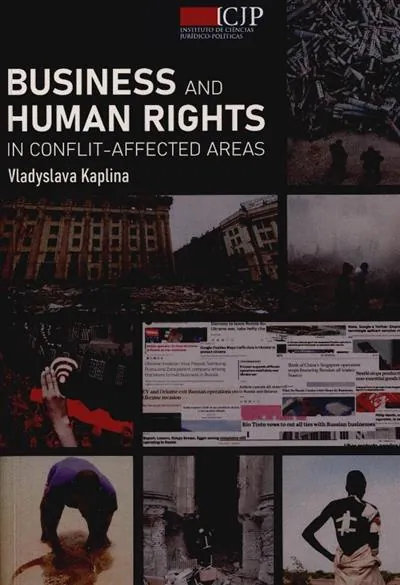
Business and human rights in conflict-affected areas
AAFDL - Associação Académica da Faculdade de Direito de Lisboa · 2026
Onde comprar
Não encontrámos este livro nas livrarias online. Pode estar à venda em livrarias físicas, quiosques ou diretamente na editora.
Ler gratuitamente
BiblioLED: empréstimo gratuito de eBooks e audiolivros com o cartão da sua biblioteca municipal.
Nem todos os livros estão disponíveis em todas as regiões.
Bibliotecas municipais
Abstract. Enterprises can influence the lives of communities in both positive and negative ways. On the one hand, business can contribute to the development of globalisation processes, be our employer, promote economic prosperity, but, on the other hand, they can violate our rights and freedoms, provoke conflicts with local communities regarding land rights or development of extractive sector, support for extremist groups or dictatorial regimes to receive additional economic benefits. To help business navigate through complex environments of their operations, the UN adopted the UN Guiding Principles on Business and Human Rights which proclaim the necessity for business to respect human rights and to conduct human rights due diligence.However, companies’ operations become even more complex when it comes to operations in conflict-affected areas. This book explores how companies can contribute to human rights and environmental violations in conflict-affected and high-risk areas. It challenges the assumption used often by companies which assumes that they can remain neutral in conflict zones, arguing instead that their presence and activities inevitably influence conflict dynamics and may contribute to human rights violations, including war crimes.Central to the analysis is the concept of heightened human rights due diligence that requires companies to assess not only their direct human rights impacts but also analyse the conflict by using a conflict-sensitive approach to understand how companies may contribute to the conflict.The study also integrates international humanitarian law into the business and human rights framework, emphasising that companies operating in conflict zones must understand and respect IHL and violations of it can result in civil or criminal liability, including prosecution of corporate executives under international criminal law.Through detailed case studies - from World War II industrialists to modern examples such as Lafarge, Lundin and Amesys - the book illustrates how companies have been held accountable for human rights abuses in conflict-affected areas.The book concludes by highlighting the importance of the adoption of a binding international treaty on business and human rights, and calls for clearer guidance on business operations in armed conflicts. It emphasises that responsible business conduct in conflict zones is a strategic necessity for companies that seek to avoid reputational, operational, and liability risks.TABLE OF CONTENTACKNOWLEDGMENTSLIST OF ABBREVIATIONSINTRODUCTIONCHAPTER I. HUMAN RIGHTS DUE DILIGENCE: WHAT IT IS AND WHY IT IS NEEDEDI.I Historical background of business and human rights fieldI.I.I. From post-World War II till the Sullivan PrinciplesI.I.II. Post-Sullivan Principles WorldI.I.III. UNGPs and contemporary business & human rightsI.II Human Rights Due Diligence: the process and main actorsI.II.I. What Do We Understand Under Human Rights Due Diligence?I.II.II. How to Conduct Human Rights Due Diligence?I.II.III. Several notes on HRDD’s criticismCHAPTER II. CONFLICT-AFFECTED AND HIGH-RISK AREAS: DEFINITION, SCOPE AND REGULATIONII.I Conflict-Affected and High-Risk Areas: When Occur and How to DetermineII.I.I. Conflict-Affected AreasII.I.II. High-Risk AreasII.I.III. How Can Companies Identify Conflict-Affected and High-Risk Areas?II.II International Humanitarian Law and Business: Finding a BridgeII.II.I. Jus Contra Bellum, Jus ad Bellum, Jus in Bello and Jus post Bellum: A Brief IntroductionII.II.II. Why and How Is IHL Relevant for Companies?II.II.III. How Can Companies Contribute to IHL Violations?CHAPTER III. BUSINESS’ ACTIONS IN CONFLICTAFFECTED AREAS AND CONSEQUENCES FOR HUMAN RIGHTS VIOLATIONS AND ABUSEIII.I What Should Companies Do in CAA?III.I.I. Heightened Human Rights Due Diligence: Another Corporate Burden?III.I.II. How to Conduct Heightened Human Rights Due Diligence?III.I.III. UNDP Guide on hHRDD: One Remedy for All?III.II Possible Consequences for Companies’ Violation of IHL and human rights in CAAIII.II.I. Economic Cases and World War II: How It All StartedIII.II.II. The Phenomenon of ComplicityIII.II.III. Modern Attempts to Bring Companies to Justicea) Companies’ liability: Introductory remarksb) Parent company liability for action of subsidiary: Is it possible?III.II.IV. Corporate Liability for IHL violationsa) Corporate’s prosecution at international levelb) Corporate’s persecution at national levelCONCLUSIONSBIBLIOGRAPHY
Sinopse: Almedina
- ISBN
- 978-989-9312-26-5
- Editora
- AAFDL - Associação Académica da Faculdade de Direito de Lisboa
- Ano
- 2026
- Categoria
- Direito
- Formato
- 254 p., il., 23 cm